Section
How to Choose a Pickleball Paddle: 8 Decisions, in Order
By Sukie Gao · Updated 2026-11-08 · How we research
We may earn a commission when you buy through links on this page.
Short answer
Decide in this order: budget, store, shape, weight, core thickness, face material, grip size and handle, and last, whether you need a paddle on the USA Pickleball approved list. Most published weights sit between 7.8 and 8.2 oz, so the early choices narrow the field more than the later ones.
Wondering how to choose a pickleball paddle when every listing quotes millimetres, ounces and carbon grades you have never needed before? Most buying advice hands you a pile of specs at once. That is backwards. The specs depend on each other: your budget decides which faces you can afford, your shape choice changes how a given weight behaves, and tournament play adds a rule check that open-play regulars can skip.
So this page puts the decisions in order. Each step says what the spec means, what the makers in our catalogue actually publish for it (187 paddles and sets from 40 brands, read on 2026-11-08), what USA Pickleball's rules allow, and which of our deeper guides covers it in full. If you would rather answer five questions and get a shortlist with reasons attached, the paddle finder on this page does that, with no email gate. The table at the bottom puts every trade-off on one screen.
Your 6 best matches, and why
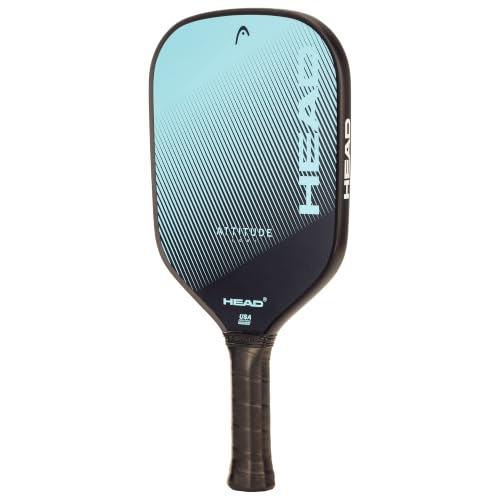
1.HEAD Attitude CORE
15 mm core · Widebody · 5 in handle · USAP listed
- Widebody shape: shorter and wider than an elongated paddle, so more face sits around the centre
- Under $60 per paddle, a sensible first purchase
- The maker describes it as beginner-friendly
2.Selkirk SLK Evo Control Max
7.6-8.1 oz · 16 mm core · Hybrid · 4.85 in handle · 4.25 in grip
- 16 mm core: the thicker end of the range
- Under $60 per paddle, a sensible first purchase
- Hybrid shape: between elongated and standard
- The maker describes it as beginner-friendly
3.niupipo Fiberglass Paddle SetSet of 2
7.8 oz · Widebody · 4.8 in handle · 4.3 in grip · No matching USAP entry found
- Widebody shape: shorter and wider than an elongated paddle, so more face sits around the centre
- Under $60 per paddle, a sensible first purchase
4.PRO-SPIN Boost FiberglassSet of 2
7.9 oz · 13 mm core · Widebody · USAP listed
- Widebody shape: shorter and wider than an elongated paddle, so more face sits around the centre
- Under $60 per paddle, a sensible first purchase
5.JOOLA Ben Johns Fiberglass Paddle SetSet of 2
6.8 oz · 13 mm core · Standard · 4.5 in grip · USAP: several similar entries, check the model
- Standard shape: shorter and wider than an elongated paddle, so more face sits around the centre
- Under $60 per paddle, a sensible first purchase
6.SONICORE CourtVibe T700 16mmSet of 2
16 mm core · No matching USAP entry found
- 16 mm core: the thicker end of the range
- Under $60 per paddle, a sensible first purchase
- The maker describes it as beginner-friendly


Specs are the makers' published figures (each paddle links its source). Prices from Amazon are as of 2026-11-12 and can change; we don't lab-test paddles. As an Amazon Associate we earn from qualifying purchases.
Step 1: Set a budget before you read a single spec
Price is the first filter because it quietly decides several later answers. Across the 169 single paddles in our catalogue, 19 sit under $60, 40 between $60 and $120, 45 between $120 and $180, and 65 above $180. Every one of the 18 paddle sets works out under $60 per paddle. Face material tracks price closely, as Step 6 shows: all nine fiberglass single paddles are under $90, while half of the carbon-faced paddles list at about $175 or more.
Two questions settle the band. First, how often will you play? Someone trying the sport twice a month gets almost nothing from a $200 paddle that a $40 one would not give them. Second, are you buying for two? A couple or a family is usually better served by a set, and our Pickleball Paddle Set guide compares those per paddle.
Budget also means replacement. Paddles wear: the gritty texture on many faces smooths with use, and the core can soften. Our guide How Long Do Pickleball Paddles Last covers the signs, so you can weigh a cheaper paddle replaced sooner against a dearer one kept longer. If you land under $60, our Cheap Pickleball Paddles and Pickleball Paddles for Beginners pages list the catalogue options with their published specs.
The difference between a bad paddle and a good paddle is massive. The difference between a good paddle and a great paddle is minimal.
— r/Pickleball user (player opinion), thread “How much does the paddle make the difference?”
Step 2: Decide where you will buy, because it changes what you can check
Of the 187 items in our catalogue, 98 link to an Amazon listing and 89 to the maker's own store (most CRBN, RPM and 11SIX24 models, for example). When you work out how to choose a pickleball paddle online, where you buy changes three things. Price: Amazon prices on our cards come from Amazon's own API, refreshed daily with a timestamp, while maker-store prices are read from the brand page and dated. Returns: policies differ by seller, so read the return terms on the listing before you pay, since you cannot demo a paddle bought online. Spec quality: brand pages usually publish more numbers than marketplace listings, and marketplace listings sometimes copy the wrong spec between variants.
That last point is real, not hypothetical. One CRBN 3X Power 14 mm listing states a 16 mm core in its dimensions bullet, copied from the 16 mm version; we took the 14 mm depth from the USA Pickleball registry instead. When a listing contradicts itself, trust the maker page or the registry over the bullet points.
Budget marketplace brands deserve one extra check. Several low-cost listings name premium carbon grades such as Toray T700. Thirteen catalogue items, mostly budget Amazon brands, have no matching entry we could find on the USA Pickleball list on 2026-11-08. That does not make them bad paddles for casual play, but it does mean the spec sheet is the seller's word alone.
Step 3: Pick a shape: reach or a wider face?
USA Pickleball caps a paddle's length plus width at 24 inches, with length no more than 17 inches (Equipment Standards Manual, 2.E.3). Every shape is a way of spending those 24 inches. Elongated paddles go long and narrow (16.5 × 7.5 in is the most common published size in our catalogue), widebody paddles go short and wide (16 × 8 in and 15.8 × 8.2 in appear), and hybrids sit between.
Length buys reach and a longer lever; width puts more of the face beside the centre line. 11SIX24 publishes swing weight and twist weight for paddles of the same static weight in different shapes: its elongated Hurache-X Power 2 lists swing weight 114–118 and twist weight 6.25–6.5, while its widebody Pegasus Power 2 lists 105–110 and 7–7.25. Those are the maker's numbers, and they show the pattern: the longer shape is heavier to swing, the wider one resists twisting more.
Our catalogue holds 87 elongated, 33 hybrid, 25 widebody and 7 standard items; the other 35 give neither a shape nor usable dimensions. The full comparison, including how we label shapes when makers disagree, is in Elongated vs Widebody Pickleball Paddle. Coming from tennis? Read that guide before assuming you need the longest shape; our Best Pickleball Paddles for Tennis Players page goes further.
Step 4: How heavy is heavy? Read the weight range, not the label
USA Pickleball sets no weight limit (2.E.4), so weight is purely a preference. What makers publish is narrower than the marketing suggests. Of 139 single paddles in our catalogue with a published weight, 122 have a midpoint between 7.8 and 8.19 oz; the lightest midpoint is 7.7 oz and the heaviest 8.5 oz. Ranges such as 8.0–8.3 oz describe manufacturing tolerance: two copies of the same model can differ by that much.
Static weight is only half the story. Where the mass sits matters as much as how much there is, which is why the swing weights in Step 3 differ at the same ounce figure. A heavier or more head-weighted paddle carries more momentum into the ball; a lighter one moves faster at the net. Players add lead tape to tune this, and the rules allow weighted tape as a player alteration (2.E.5.a).
Our Pickleball Paddle Weight guide charts every published weight in the catalogue and explains lead tape placement within the rules. If you want the lightest options, the paddle weight guide lists them, with one honest caveat: no single paddle in our catalogue publishes a weight under 7.6 oz, so the lightest choices today are inside some sets.
Step 5: Core thickness: what 14 mm and 16 mm tell you, and what they don't
The core is the layer between the two faces, traditionally a polymer honeycomb and increasingly foam, and its depth is printed in millimetres. The rules set no thickness limit (2.E.3). In practice the catalogue clusters hard: 96 of the 154 single paddles that publish a core are 16 mm, 34 are 14 or 14.3 mm, four are sold in both depths, and the remainder spread from 10 mm (Franklin Pilot) to 19 mm (Selkirk's LUXX Control models).
Here is the part most guides skip: makers do not agree on what thickness does. Many retailers say thicker means more control; Onix's own paddle FAQ says a thicker core often means more power. Our catalogue shows why the rule of thumb is shaky. Every paddle a maker labels control that also publishes a single core depth is 15 mm or thicker, but 17 of the 27 maker-labelled power paddles with a published depth are 16 mm too. Thickness is one input, not the verdict.
Our 14mm vs 16mm Pickleball Paddle guide lays out models sold in both thicknesses with their published weights side by side, so you can see what changes when only the core does.
Step 6: Fiberglass, graphite or carbon face?
The face is the skin over the core. JOOLA, which sells both, describes carbon fiber as stiff and durable, deforming less on contact for control and precision, and fiberglass as less stiff, flexing more and returning more energy for a more powerful response. Treat those as maker claims, but they match how most brands frame the choice.
Price follows material. In our catalogue, 119 single paddles have a carbon face, 9 fiberglass, 4 graphite and 16 a carbon-and-fiberglass hybrid. All nine fiberglass paddles are under $90, and most are under $60, while carbon spans everything from budget listings to the $350 tier. Sets lean fiberglass: 11 of 18.
Construction matters alongside material. Thermoforming, a heat-moulding process that bonds the faces and edges into one shell, is mentioned in the specs or listing of 22 catalogue items, all but one (Spartus's Kevlar-faced Apollo) with carbon in the face, priced from under $60 to over $200; our Thermoformed Pickleball Paddles guide explains what makers claim for it. Face texture is regulated too: surfaces may not have features that impart excessive spin, checked by roughness and friction tests (2.E.2 and 2.E.6). The full comparison, with counts and price bands, is in Fiberglass vs Carbon Fiber Pickleball Paddle; Carbon Fiber Pickleball Paddles lists the carbon options.
Step 7: Get the grip size and handle length right
Grip circumference is the step people skip and regret. Selkirk's published method is simple: measure from the middle crease of your palm to the tip of your ring finger; that length, usually between 4 and 5 inches, is your grip circumference. As a fallback, Selkirk suggests 4 in below 5'3", 4.25 in from 5'3" to 5'8", and 4.5 in above 5'8". Our Pickleball Paddle Grip Size tool runs that method for you.
In our catalogue, 129 single paddles publish a circumference, and 4.125 in and 4.25 in account for 110 of them. If you fall between sizes, go smaller: an overgrip adds circumference, but nothing takes it away.
Handle length is a separate number. Of the 131 single paddles that publish it, 64 list 5.5 in; the range runs from 4.85 in (Selkirk's SLK Max-shape paddles) to 6 in (11SIX24's Hurache-X Power 2 and two others). Players who hit two-handed backhands usually look for 5.25 in or longer, which is what the long-handle filter in our catalogue tool selects.
- Measure palm crease to ring-finger tip with a ruler.
- Round down if you land between two published sizes.
- Check the listing's handle length if you play two-handed.
- Plan for an overgrip only if you need to size up.
Step 8: Only if you compete: check the USA Pickleball list
USA Pickleball keeps a public approved-paddle list: 5,400 paddles on 2026-11-08. Tournament directors check paddles against it, and the paddle itself must be marked with its brand and model (2.E.7). A rule change also matters here: the paddle-ball power limit (PBCoR) dropped from 0.44 to 0.43 on November 1, 2025, so older approvals do not tell you everything about current testing.
In our catalogue, 78 items are on the list with a dated entry, 50 are ambiguous (the maker registers several similar models, so the exact one needs checking), and 13 have no matching entry we found on 2026-11-08. The other 46, nearly all from makers' own stores, show no status yet, because our automatic brand-and-model match found no entry for them. Marketplace titles often say approved; the registry is the only place that settles it.
If you only play open play or with friends, this step may not apply; ask your club or league what it requires. If you do enter sanctioned events, use our USA Pickleball Approved Paddles lookup, which searches a copy of the full list, before you buy rather than after.
The trade-offs on one table
Once you have walked the eight steps, this table is the summary to keep. Each row is one decision, the two ends of it, and what the published number or rule actually tells you. Nothing here is a rating: it is a map of specs, so you can read any listing and know which way it leans. If you only remember one thing about how to choose a pickleball paddle, make it the order: budget and grip first, fine-tuning specs after.
| Decision | One end | Other end | What the spec tells you | Rule |
|---|---|---|---|---|
| Budget | Under $60 (19 paddles, all 18 sets) | Over $180 (65 paddles) | Price mostly tracks face material and construction | None |
| Shape | Elongated, e.g. 16.5 × 7.5 in | Widebody, e.g. 16 × 8 in | Length adds reach and swing weight; width adds twist resistance | L + W ≤ 24 in; L ≤ 17 in (2.E.3) |
| Weight | Lightest midpoint 7.7 oz | Heaviest midpoint 8.5 oz | Most sit 7.8–8.19 oz; balance matters as much as ounces | No limit (2.E.4); weighted tape allowed (2.E.5.a) |
| Core | 14 mm (34 paddles) | 16 mm (96 paddles) | Makers disagree on control vs power; compare within one model | No limit (2.E.3) |
| Face | Fiberglass (9 paddles, all under $90) | Carbon (119 paddles) | Makers say fiberglass flexes for power, carbon stays stiff for control | Roughness and friction tests (2.E.2, 2.E.6) |
| Grip | 4.125 in | 4.5 in | Measure palm crease to ring-finger tip; size down if between | Grip changes allowed (2.E.5.a) |
| Handle | 4.85 in | 6 in | 5.25 in+ suits two-handed backhands | None |
| Approval | On the USAP list (77 items) | No entry found (13 items) | Matters for sanctioned events, not casual play | PBCoR ≤ 0.43 from Nov 1, 2025 |
Every page in this section
- 14mm vs 16mm Pickleball Paddle
14mm vs 16mm pickleball paddle: the core depth, what makers claim for each, and the published weights of models sold in both thicknesses, side by side.
- Elongated vs Widebody Pickleball Paddle
Elongated vs widebody pickleball paddle: USAP's 24-inch rule, published sizes per shape, makers' swing and twist weights, and which shape suits how you play.
- Fiberglass vs Carbon Fiber Pickleball Paddle
Fiberglass vs carbon fiber pickleball paddle: what makers claim for each face, plus how many of 187 catalogue paddles use each and where their prices fall.
- Pickleball Paddle Grip Size
Pickleball paddle grip size from one hand measurement: Selkirk’s ruler test, the height chart, overgrips, and which catalogue paddles publish your size.
- Pickleball Paddle Weight
Pickleball paddle weight has no USAP limit. See where published weights cluster, which light paddles exist, and where lead tape is allowed by the rules.
- USA Pickleball Approved Paddles
USA pickleball approved paddles lookup: search all 5,400 entries on the official list, see added dates, and how 61 listings that claim approval checked out.
- How Long Do Pickleball Paddles Last?
How long do pickleball paddles last? No fixed lifespan exists. See the wear signs players describe, stated warranty terms and a keep-or-replace checklist.
Questions people ask
- What matters most when choosing a pickleball paddle?
- For most players, budget and grip size. Budget decides which face materials and constructions are on the table, and a grip that is too big is the one mistake you cannot fix cheaply. Shape, weight and core thickness come next and mostly tune a paddle you can already hold comfortably.
- Is an expensive paddle better for a beginner?
- Not necessarily. The paddles above $180 in our catalogue are almost all carbon-faced, often thermoformed designs that makers aim at regular players. A beginner can learn the game with a fiberglass paddle or set under $60, and many players on Reddit argue that practice matters far more than the paddle at that stage.
- Should a tennis player buy an elongated paddle?
- Not automatically. An elongated shape adds reach, which tennis players often like, but handle length is what makes room for a two-handed backhand, and some hybrid and widebody paddles have handles of 5.25 to 5.5 inches. Check the published handle length first, then decide on shape.
- Does a thicker core mean more control?
- That is the common claim, but makers disagree: Onix says thicker cores often give more power. In our catalogue, every maker-labelled control paddle with a published core is 15 mm or thicker, yet more than half of the maker-labelled power paddles are 16 mm as well. Compare the 14 and 16 mm versions of one model to isolate the difference.
- Do I need a USA Pickleball approved paddle?
- Only if you play sanctioned tournaments or a league that requires it. The approved list had 5,400 paddles on 2026-11-08. For open play, ask your venue. Before buying for competition, check the exact model on the list with our lookup tool, since many listings use the word approved loosely.
- What weight should my first paddle be?
- USA Pickleball sets no limit, and most published weights in our catalogue sit between 7.8 and 8.2 oz, so a midweight paddle in that band is the default. Go lighter if you want quicker hands or have arm concerns (ask a clinician about the latter); add lead tape later if you want more mass.
Sources & further reading
- USA Pickleball Equipment Standards Manual, Rev 3.0 (Jan 2025)
- USA Pickleball Approved Paddle List (read 2026-11-08)
- Selkirk: How do I know my pickleball grip size (read 2026-11-08)
- JOOLA: Pickleball Paddle Surfaces: Carbon vs Fiberglass (read 2026-11-08)
- Onix paddle collection and FAQ
- 11SIX24 Hurache-X Power 2 product page (swing and twist weight)
- r/Pickleball: How much does the paddle make the difference? (player opinions)
- r/Pickleball: How did you choose your paddles? (player opinions)
Read next
- Best Pickleball Paddles
Best pickleball paddles for every budget: 9 picks from 187 catalogued paddles, with maker specs, USA Pickleball list status and live Amazon prices.
- Pickleball Paddles for Beginners
Pickleball paddles for beginners: a cheap set or a $90 to $120 first real paddle? Six picks with maker specs, USA Pickleball list status and live prices.
- Pickleball Paddle Weight
Pickleball paddle weight has no USAP limit. See where published weights cluster, which light paddles exist, and where lead tape is allowed by the rules.
- Elongated vs Widebody Pickleball Paddle
Elongated vs widebody pickleball paddle: USAP's 24-inch rule, published sizes per shape, makers' swing and twist weights, and which shape suits how you play.
- Pickleball Paddle Grip Size
Pickleball paddle grip size from one hand measurement: Selkirk’s ruler test, the height chart, overgrips, and which catalogue paddles publish your size.
- USA Pickleball Approved Paddles
USA pickleball approved paddles lookup: search all 5,400 entries on the official list, see added dates, and how 61 listings that claim approval checked out.
Back to the Pickle & Spin home page.

Sukie Gao · Founder & Editor
Sukie Gao is the founder and editor of Pickle & Spin. She builds the site's paddle catalogue from manufacturer spec sheets and the official USA Pickleball approved-paddle list, and writes the buying guides. Pickle & Spin does not lab-test paddles; every number on the site links to the place it came from.
About this site · How pages are checked · Last updated November 8, 2026
As an Amazon Associate, Pickle & Spin earns from qualifying purchases. Some other links are affiliate links too. It costs you nothing extra and never decides which paddles we list.
Pickle & Spin is an independent site. It is not affiliated with USA Pickleball, UPA-A or any paddle brand. Brand names and trademarks belong to their owners.