Guide
Best Pickleball Paddles for Intermediate Players: 5 Upgrades
By Sukie Gao · Updated 2026-11-08 · How we research
We may earn a commission when you buy through links on this page.
Short answer
Upgrade from what you own: a fiberglass starter to the 11SIX24 Pegasus Jelly Bean 2, a cheap elongated carbon to the JOOLA Magnus 3S 14mm.
"Intermediate" means something fairly specific, and the best pickleball paddles for intermediate players only make sense once you pin it down. In skill-rating terms, whether a club self-rating or a DUPR rating, it usually means the 3.0 to 3.5 band. You can keep a dink rally going, you get to the kitchen line on purpose, and you're starting to choose shots rather than just send the ball back. Your paddle now limits you in specific ways, not general ones.
That's why this page frames every pick as an upgrade from a paddle you probably own. A player coming off a fiberglass starter set needs something different from one who bought a $50 carbon paddle six months ago. Five picks follow, each with its maker specs and USA Pickleball list date, then a side-by-side table and plain explanations of foam cores and Gen labels. If none of the five fits, the finder below asks six questions and explains each result.
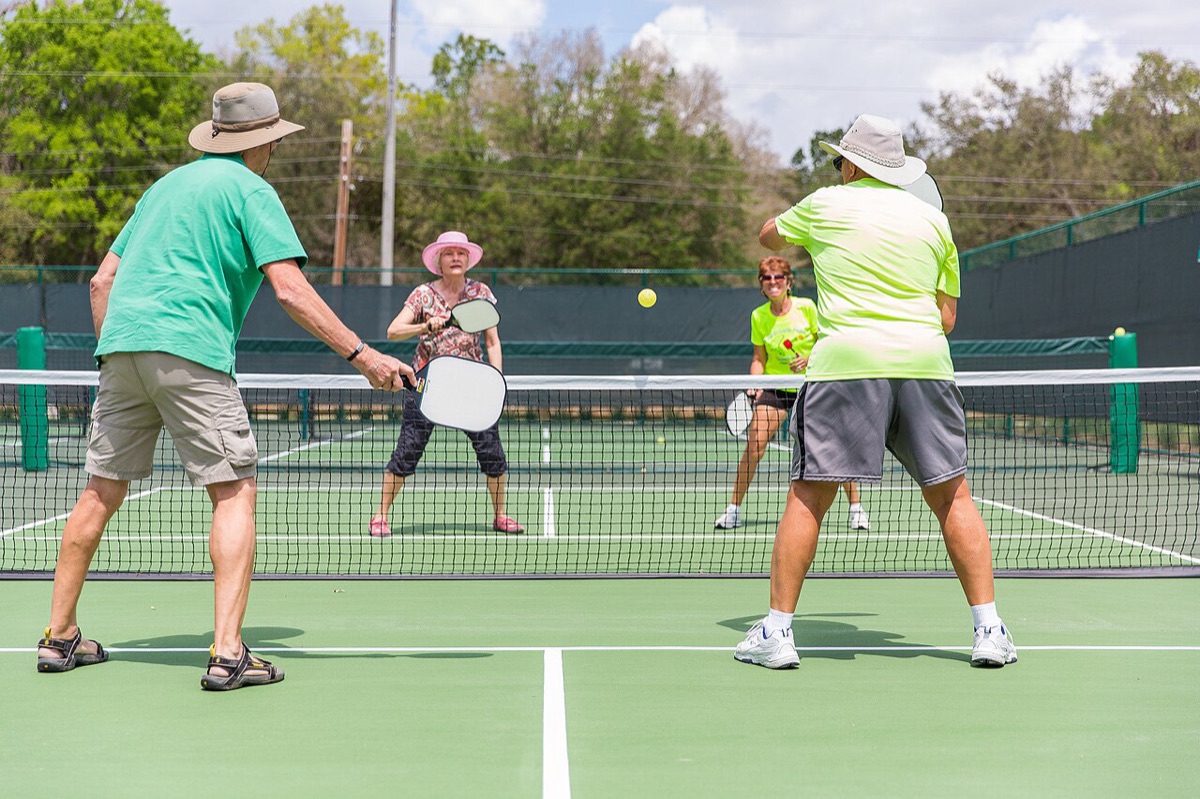
Five upgrades, each matched to the paddle you have now
1. Upgrade from a fiberglass starter
11SIX24 Pegasus Jelly Bean 2
Keeps the wide face you're used to (15.8 x 8.2 in) but moves to a carbon-fiberglass-carbon face over a 16mm foam-and-honeycomb core. 11SIX24 lists swing weight 109 to 112 and twist weight 7.1 to 7.3. It's on the USA Pickleball approved list (added 01/27/2025).
Buy it if: Players whose dinks and resets are improving and who want more grip on the ball without a harder-to-control face. Skip it if: You want reach; it's the shortest face in this list.
- Weight
- 8.0-8.3 oz
- Core
- 16 mm, EMA foam core
- Shape
- Widebody (15.8 × 8.2 in)
- Handle
- 5.5 in
- Grip
- 4.125 in
- Face
- HexGrit surface on CFC triple-layer face (Toray T700 carbon fiber and fiberglass)
Specs: 11SIX24 product page (2026-11-08)
2. Upgrade from a sub-$60 elongated carbon
JOOLA Tyson McGuffin Magnus 3S 14mm
JOOLA lists 7.9 oz, a 16.5 x 7.5 in elongated face and a raw carbon surface it calls Charged Carbon, over a 14mm Propulsion Core. It's on the USA Pickleball approved list (added 01/15/2025, registered as Magnus 3S Dual 14mm).
Buy it if: Players who like their elongated shape and want a livelier 14mm core for drives and counters. Skip it if: You already pop dinks up; stay at 16mm.
- Weight
- 7.9 oz
- Core
- 14 mm, Propulsion Core
- Shape
- Elongated (16.5 × 7.5 in)
- Face
- Charged Carbon Surface (raw carbon fiber)
- USAP list
- Listed, added 01/15/2025
Specs: Amazon listing (manufacturer/seller-supplied text) (2026-11-08); USA Pickleball Approved Paddle List entry 10485 (2026-11-08)
3. Upgrade from a HEAD Radical Elite or Radical Pro
HEAD Radical Pro EX15 (2026)
The same Radical family, moved to a micro-forged raw carbon face over a 15mm core of honeycomb with foam perimeter and shell. HEAD lists 8.5 oz, 16 x 7.5 in, a 5.5 in handle and a 4.125 in grip, and calls it a precision and control paddle. It's on the USA Pickleball approved list (added 10/22/2025).
Buy it if: Players who want a steadier, heavier paddle for blocks and resets. Skip it if: Your arm tires late in a session; at 8.5 oz it's the heaviest pick here.
- Weight
- 8.5 (+/-5 g) oz
- Core
- 15 mm, TriFlex Versatility core (honeycomb center, EPP foam perimeter, EVA foam shell)
- Shape
- Elongated (16 × 7.5 in)
- Handle
- 5.5 in
- Grip
- 4.125 in
- Face
- micro-forged raw carbon
- USAP list
- Listed, added 10/22/2025
Specs: Amazon listing (manufacturer/seller-supplied text) (2026-11-08); USA Pickleball Approved Paddle List entry 11881 (2026-11-08)
4. Upgrade from a Selkirk SLK Evo or Halo
Selkirk Labs Project 008 Tour 16mm
Selkirk's Labs line: a thermoformed raw T700 carbon face with a perimeter foam wall, a 16mm solid PureFoam core and an octagonal handle. The registry records the shape as oval. Selkirk's listing calls it an intermediate paddle, and it's on the USA Pickleball approved list (added 01/20/2025).
Buy it if: Selkirk owners who want a newer foam-core build at around $100. Skip it if: You want weight and dimensions on paper; the listing we use doesn't give them.
- Core
- 16 mm, high-density PureFoam
- Face
- T700 raw carbon fiber
- USAP list
- Listed, added 01/20/2025
Specs: Amazon listing (manufacturer/seller-supplied text) (2026-11-08); USA Pickleball Approved Paddle List entry 10616 (2026-11-08)
5. Upgrade from a first carbon paddle
BREAD & BUTTER The Loco Hybrid 16mm
A hybrid shape with T-700 raw carbon over a fiberglass layer, a 16mm dual-density EPP and EVA foam core, 7.9 to 8.1 oz, a 5.3 in octagonal handle and a 4.25 in grip. Bread & Butter calls it a versatile power paddle. It's on the USA Pickleball approved list (added 08/18/2025).
Buy it if: Players on a Vatic Prism Flash or similar who want more pace on drives and serves. Skip it if: You're still working on soft-game consistency; a power paddle punishes loose dinks.
- Weight
- 7.9-8.1 oz
- Core
- 16 mm, dual-density EPP and EVA foam
- Shape
- Hybrid
- Handle
- 5.3 in
- Grip
- 4.25 in
- Face
- T-700 raw carbon fiber with fiberglass layer
- USAP list
- Listed, added 08/18/2025
Specs: Amazon listing (manufacturer/seller-supplied text) (2026-11-08); USA Pickleball Approved Paddle List entry 11868 (2026-11-08)


Product prices and availability are accurate as of 2026-11-12 and are subject to change. Specs are the makers' published figures; we don't lab-test paddles.
Your 6 best matches, and why
1.HEAD Extreme Elite
7.8 oz · Hybrid · 4.125 in grip · USAP listed
- Hybrid shape: between elongated and standard
2.HEAD Radical Pro
8.1 oz · Hybrid · 4.25 in grip · USAP: several similar entries, check the model
- Hybrid shape: between elongated and standard
3.HEAD Radical Elite
8.1 oz · Hybrid · 4.25 in grip · USAP: several similar entries, check the model
- Hybrid shape: between elongated and standard
4.Selkirk SLK Evo Control Max
7.6-8.1 oz · 16 mm core · Hybrid · 4.85 in handle · 4.25 in grip
- Hybrid shape: between elongated and standard
5.Selkirk SLK Halo Control Max
7.7-8.0 oz · 16 mm core · Hybrid · 4.85 in handle · 4.25 in grip · USAP: several similar entries, check the model
- Hybrid shape: between elongated and standard
6.Selkirk SLK Halo Power Max
7.7-8.0 oz · 16 mm core · Hybrid · 4.85 in handle · 4.25 in grip
- Hybrid shape: between elongated and standard


Specs are the makers' published figures (each paddle links its source). Prices from Amazon are as of 2026-11-12 and can change; we don't lab-test paddles. As an Amazon Associate we earn from qualifying purchases.
What an upgrade should change, and what it shouldn't
An upgrade should fix one thing you can name. Common ones are balls that sail long on drives, dinks that float, off-centre blocks that twist the face, and a smooth face that won't hold topspin any more. Each points to a different spec. Floaty dinks point to a thicker or softer core. Twisting on blocks points to a wider face or a higher twist weight where the maker publishes one. A worn, slick face points to raw carbon.
What an upgrade shouldn't change is everything at once. If you've spent a year on a 16mm widebody and jump to a 14mm elongated power paddle, your touch shots will fall apart for weeks and you won't know which change caused it. Change one or two variables (face material plus core, or shape plus weight) and keep the rest close to what you have.
How do you know you're ready? Three signs come up again and again. You play at least weekly. You can name the shot your paddle lets you down on. And you've stopped borrowing other people's paddles to see what they're like, because you already know what you prefer. If none of that is true yet, the beginner page will save you money. If all three are, the best pickleball paddles for intermediate players are the ones that fix your named shot, and the list below is built that way.
Budget is the other honest constraint. Every pick here sat between about $100 and $170 on the brand store or Amazon when we last checked, which is where most of the 2024 to 2026 carbon and foam designs land. Spending more mostly buys newer construction, which the best pickleball paddles page covers in its premium picks.
Find your upgrade in one step
Start from the paddle in your bag. Each line names the pick that changes the fewest things while fixing the most common complaint about that paddle.
This is also how we chose the five. Many lists of the best pickleball paddles for intermediate players rank by a reviewer's taste, so the same three premium paddles turn up whatever you own. We started from the paddles our catalogue shows people starting on: the starter sets, the sub-$60 carbon singles and the first-real-paddle picks from the beginner guide. For each one we found a listed paddle that keeps the familiar specs and changes one or two. Every pick also had to have a matching entry on the USA Pickleball approved list, so it's legal if you start entering local tournaments.
- Fiberglass starter from a set (Selkirk SLK Neo, Franklin Pilot, an Amazon two-pack): 11SIX24 Pegasus Jelly Bean 2. Same wide face, now carbon and 16mm.
- Cheap elongated carbon such as the JOOLA Graf Edge: JOOLA Magnus 3S 14mm. Same 16.5 x 7.5 in shape, livelier 14mm core.
- HEAD Radical Elite or Radical Pro (fiberglass, 8.1 oz hybrid): HEAD Radical Pro EX15. Same family, carbon face, more weight for stability.
- Selkirk SLK Evo Control or SLK Halo: Selkirk Labs Project 008 Tour 16mm. Moves from honeycomb to a thermoformed foam-core build.
- Vatic Pro Prism Flash or another 16mm raw carbon paddle you like but want more pace from: Bread & Butter Loco Hybrid 16mm.
The five side by side
All five picks have a matching entry on the USA Pickleball approved list. Blank cells mean the maker's listing doesn't publish that figure. Live prices are on the pick cards above.
| Paddle | Upgrade from | Core | Weight (oz) | Shape, L x W (in) | Handle (in) | Face | USA Pickleball list |
|---|---|---|---|---|---|---|---|
| 11SIX24 Pegasus Jelly Bean 2 | A fiberglass starter (SLK Neo, Franklin Pilot) | 16 mm | 8.0-8.3 | widebody, 15.8 x 8.2 | 5.5 | HexGrit surface on CFC triple-layer face | Listed (added 01/27/2025) |
| JOOLA Tyson McGuffin Magnus 3S 14mm | A sub-$60 elongated carbon (JOOLA Graf Edge) | 14 mm | 7.9 | elongated, 16.5 x 7.5 | not listed | Charged Carbon Surface (raw carbon fiber) | Listed (added 01/15/2025) |
| HEAD Radical Pro EX15 (2026) | A HEAD Radical Elite or Radical Pro | 15 mm | 8.5 (+/-5 g) | elongated, 16 x 7.5 | 5.5 | micro-forged raw carbon | Listed (added 10/22/2025) |
| Selkirk Labs Project 008 Tour 16mm | A Selkirk SLK Evo or Halo | 16 mm | not listed | Oval (registry); L x W not listed | not listed | T700 raw carbon fiber | Listed (added 01/20/2025) |
| BREAD & BUTTER The Loco Hybrid 16mm | A first carbon paddle (Vatic Pro Prism Flash) | 16 mm | 7.9-8.1 | hybrid | 5.3 | T-700 raw carbon fiber with fiberglass layer | Listed (added 08/18/2025) |
Widebody control or elongated reach?
At 3.0 to 3.5 the shape question becomes real, because you now reach balls you used to let go. An elongated face, 16.5 x 7.5 in on the Magnus 3S, gives reach and whip on serves and drives. A widebody like the Jelly Bean 2 at 15.8 x 8.2 in gives a wider target on blocks and resets. USA Pickleball caps length plus width at 24 in, so every extra inch of length costs width.
Experienced players on r/Pickleball often push intermediates toward the middle rather than either extreme. One reply in a long thread on choosing paddles argued for all-court over control, because players who chose control paddles "really have to swing at their shots against good players". Another warned the other way:
- You lose most points in hand battles at the net: widebody or hybrid, 16mm.
- You lose most points on weak third shots and drives: elongated or hybrid, consider 14mm.
- You can't tell yet: hybrid, which is why the Loco Hybrid is in this list.
I've learned the hard way that every time I venture into the world of poppier paddles I regret it.
— r/Pickleball user, thread "How did you choose your paddles?" (player opinion)
Foam cores, thermoforming and "Gen" labels, translated
Paddle marketing has moved through generations, and makers use the labels loosely. In plain terms, older paddles glue a face onto a honeycomb core and wrap it in an edge guard. Thermoformed paddles are heat-moulded so the face wraps around the core and edge as one shell. Selkirk's Labs Project 008 Tour is described that way, with a perimeter foam wall. Newer designs swap some or all of the honeycomb for foam: the Loco Hybrid uses dual-density EPP and EVA foam, and 11SIX24 calls its newest floating foam core Gen 4 construction.
Makers credit these builds with a bigger sweet spot, more pop and longer life. We can't confirm any of that because we don't test, so treat the labels as a description of how the paddle is built, not a grade. Players on r/Pickleball use the same vocabulary. One recommended a paddle as "a generation 2 paddle that's thermoformed", and another weighed "Gen 1.5 tech vs gen 2 thermoforming" before buying. Our thermoformed paddle guide explains the build in more depth.
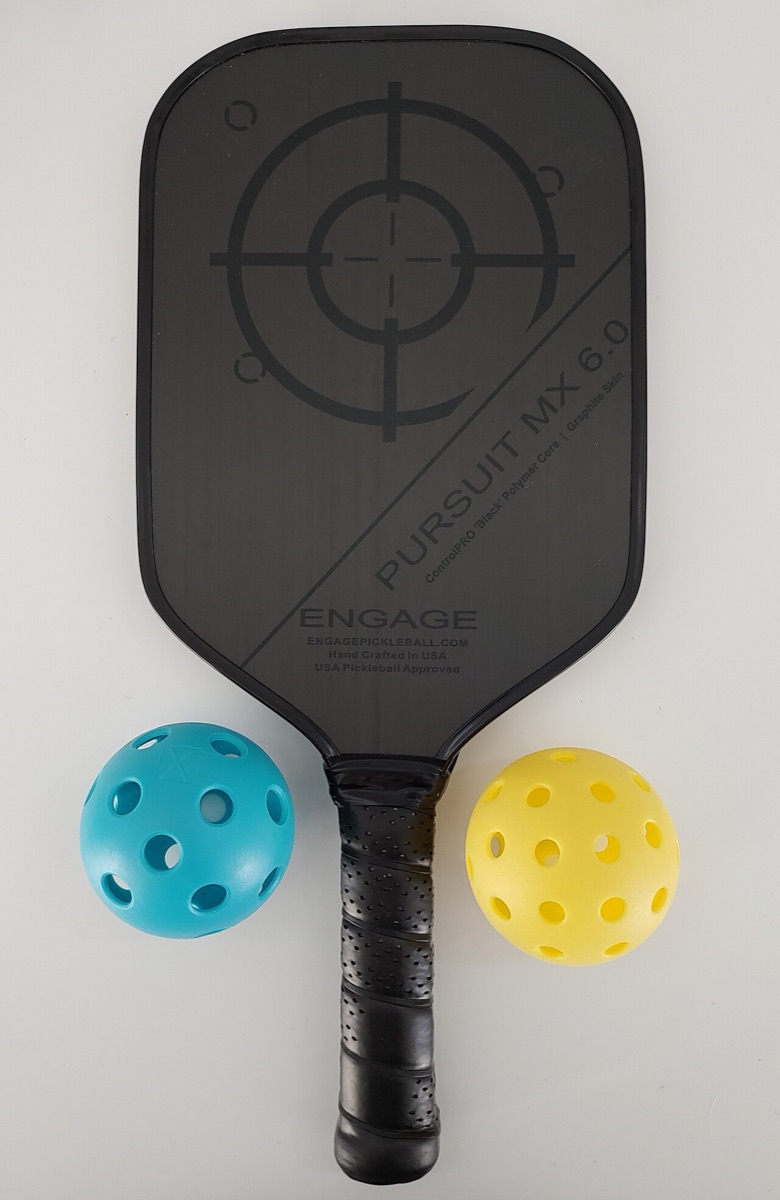
Before you spend $100 to $180: wear, trials and timing
Paddles wear out faster than tennis racquets, and that changes the maths of an upgrade. One r/Pickleball player said pickleball paddles "don't last nearly as long as a tennis racquet" and that his would "wear out in a few months". Another noticed "the surface is getting smooth so it doesn't generate spin as effectively". If you play four times a week, a $150 paddle is a recurring cost, not a one-off.
That's an argument for buying where you can return. In the same thread one player suggested trying "a higher tier paddle brand that has a 30 day trial/play period" and named several brands, but he also said he was an ambassador for two of them. Trial terms change and differ by seller, so read the policy on the brand's own site before ordering, and keep the paddle clean until you're sure.
Timing matters less than people think. New models arrive constantly; the USA Pickleball list added Six Zero's newest entries on 2026-11-06, two days before we last read it. Waiting for next season's version rarely changes much at this level, and a previous model can get cheaper once its replacement lands. Watch the live price on the card rather than the release calendar.
Finally, check the grip before anything else. Upgrading to a paddle with a 4.25 in grip from a 4.5 in one changes how it sits in your hand more than any core material. Our grip size tool converts a ruler measurement into a circumference, and our guide to how long paddles last lists the wear signs worth watching.
Questions people ask
- What paddle should a 3.5 player use?
- One that fixes your current weak point without changing everything. Most 3.0 to 3.5 players do well with a raw carbon face and a 16mm core in a hybrid or widebody shape, such as the 11SIX24 Pegasus Jelly Bean 2. Choose 14mm only if you want more pop and your soft game is reliable. If you play mostly singles or love to drive, an elongated shape such as the Magnus 3S makes more sense than a widebody.
- Is an intermediate paddle worth it over a beginner paddle?
- If you play weekly, usually yes. The jump from fiberglass to raw carbon and from a thin honeycomb core to a 16mm or foam core is the biggest spec change most players make. Moving from a $150 paddle to a $250 one is a much smaller change. Keep your old paddle as a spare. A second paddle with similar specs is useful when the first one cracks mid-session or its face wears smooth.
- Are these paddles legal for tournaments?
- Yes. All five picks have a matching entry on the USA Pickleball approved list as of 2026-11-08; the table shows each added date. Check any other paddle with our approved-paddle lookup. Look for the exact model and core thickness, because many makers register each thickness as its own entry, and the paddle must also be marked with its brand and model.
Sources & further reading
- USA Pickleball Approved Paddle List (read 2026-11-08)
- USA Pickleball Equipment Standards Manual, Rev 3.0 (Jan 2025)
- 11SIX24 Pegasus Jelly Bean 2 product page (read 2026-11-08)
- Bread & Butter Loco Hybrid 16mm listing (read 2026-11-08)
- r/Pickleball: How did you choose your paddles? (player opinions)
- r/Pickleball: Best all around paddle for casual/intermediate players? (player opinions)
Read next
- Best Pickleball Paddles
Best pickleball paddles for every budget: 9 picks from 187 catalogued paddles, with maker specs, USA Pickleball list status and live Amazon prices.
- Elongated vs Widebody Pickleball Paddle
Elongated vs widebody pickleball paddle: USAP's 24-inch rule, published sizes per shape, makers' swing and twist weights, and which shape suits how you play.
- 14mm vs 16mm Pickleball Paddle
14mm vs 16mm pickleball paddle: the core depth, what makers claim for each, and the published weights of models sold in both thicknesses, side by side.
- How Long Do Pickleball Paddles Last?
How long do pickleball paddles last? No fixed lifespan exists. See the wear signs players describe, stated warranty terms and a keep-or-replace checklist.
Part of Best Pickleball Paddles. Back to the Pickle & Spin home page.

Sukie Gao · Founder & Editor
Sukie Gao is the founder and editor of Pickle & Spin. She builds the site's paddle catalogue from manufacturer spec sheets and the official USA Pickleball approved-paddle list, and writes the buying guides. Pickle & Spin does not lab-test paddles; every number on the site links to the place it came from.
About this site · How pages are checked · Last updated November 8, 2026
As an Amazon Associate, Pickle & Spin earns from qualifying purchases. Some other links are affiliate links too. It costs you nothing extra and never decides which paddles we list.
Pickle & Spin is an independent site. It is not affiliated with USA Pickleball, UPA-A or any paddle brand. Brand names and trademarks belong to their owners.