Guide
Best Pickleball Paddle for Spin: What the Specs Can and Can't Tell You
By Sukie Gao · Updated 2026-11-08 · How we research
We may earn a commission when you buy through links on this page.
Short answer
No paddle can add unlimited spin: USA Pickleball caps face roughness and friction, so every approved paddle works inside the same limits. Within them, look for a textured raw carbon face, an elongated shape that moves the head faster, and a current entry on the approved list. The JOOLA Perseus Power FX fits all three. The JOOLA Graf Edge does the same under $60, and HEAD's Radical Tour EX Grit adds texture for even less.
USA Pickleball's surface rules decide how much the best pickleball paddle for spin can actually do: its face texture can sit close to the limit, on a shape that lets you swing the head fast, but never past it. Its Equipment Standards Manual (Revision 3.0, January 2025) says a hitting surface may not have holes, indentations, rough texturing or anything else that lets a player impart excessive spin, and it measures that with two tests: a surface roughness reading and a coefficient of friction reading. A paddle that fails either one does not get on the approved list.
That changes how to read spin claims. Every approved paddle has passed the same roughness and friction ceiling, so the gap between a "spin paddle" and an ordinary approved paddle is smaller than marketing suggests, and the biggest share of spin still comes from how you swing. We don't measure spin and we publish no RPM figures. What we can do is explain which published specs relate to spin, show how makers describe their faces, and point to five textured paddles with a current approved-list entry.
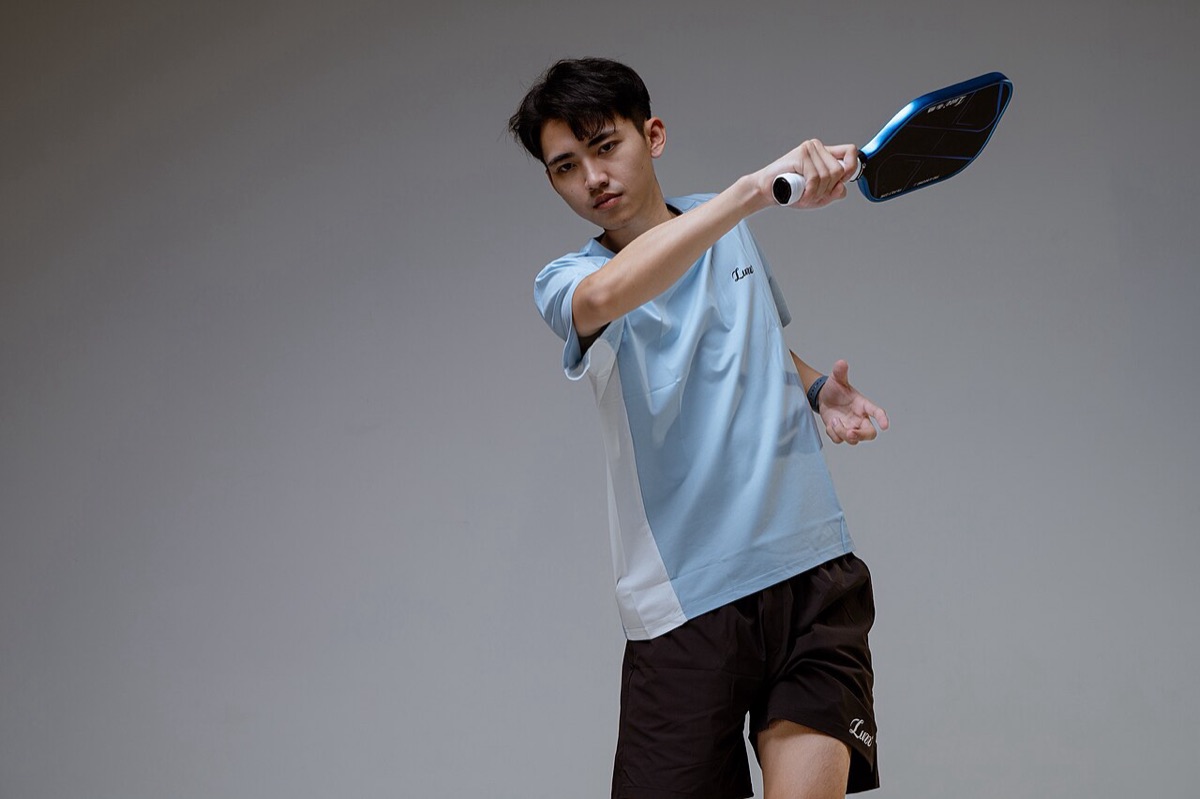
Five textured paddles worth a look for spin
1. Best spin-focused face on a recent approved paddle
JOOLA Perseus Power FX 16mm
JOOLA describes the Perseus Power FX face as high-grit raw carbon fiber, on a 16.5 x 7.5 in elongated shape with a published 7.9 oz and a 5.5 in handle. It is one of the newest entries on the USA Pickleball approved list (added 10/01/2026), so it passed the current surface tests.
Buy it if: Intermediate and advanced players who want the longest legal-style reach with a raw carbon face from a major brand. Skip it if: You want a forgiving, wide face; elongated shapes trade width for reach.
- Weight
- 7.9 oz
- Core
- 16 mm, EPP foam (Adaptive Propulsion Core)
- Shape
- Elongated (16.5 × 7.5 in)
- Handle
- 5.5 in
- Face
- high-grit raw carbon fiber
- USAP list
- Listed, added 10/01/2026
Specs: Amazon listing (manufacturer/seller-supplied text) (2026-11-08); USA Pickleball Approved Paddle List entry 13645 (2026-11-08)
2. Best raw carbon option from Selkirk
Selkirk Boomstik Raw Carbon Elongated 16mm
Selkirk names this face Raw Spin Texture on raw carbon, over a 16 mm foam core with an EVA power ring, and adds perimeter weights it calls an MOI tuning system. The maker pitches it at intermediate to advanced players, and it is on the USA Pickleball approved list (added 09/08/2025). Selkirk does not publish its weight on the listing we read.
Buy it if: Players who want a raw carbon face with weight added at the edges, which makers use to resist twisting on off-center hits. Skip it if: You need a published weight before buying; check Selkirk's own page.
- Core
- 16 mm, BoomCore (PureFoam with EVA Power Ring)
- Shape
- Elongated
- Face
- raw carbon (Raw Spin Texture)
- USAP list
- Listed, added 09/08/2025
Specs: Amazon listing (manufacturer/seller-supplied text) (2026-11-08); USA Pickleball Approved Paddle List entry 11934 (2026-11-08)
3. Best for a published swing and twist weight
Franklin Sports C45 Carbon Fiber Dynasty Pro 16mm
Franklin gives the C45 a T700 carbon fiber face with a 45-degree peel-ply texture, a double thermoformed unibody, a 16.4 x 7.6 in elongated shape, 7.6 to 8.0 oz and a 5.6 in handle. Its listing also publishes a swing weight of 116 and a twist weight of 6.3, figures most makers leave out. On the USA Pickleball approved list (added 04/17/2025).
Buy it if: Buyers who want the maker's own swing and twist weight numbers to compare. Skip it if: You are on a budget; this is one of the most expensive paddles on the page.
- Weight
- 7.6 - 8.0 oz
- Core
- 16 mm, PowerFlex polymer with inner foam layer
- Shape
- Elongated (16.4 × 7.6 in)
- Handle
- 5.6 in
- Grip
- 4.3 in
- Face
- T700 carbon fiber (45-degree peel-ply texture)
- USAP list
- Listed, added 04/17/2025
Specs: Amazon listing (manufacturer/seller-supplied text) (2026-11-08); USA Pickleball Approved Paddle List entry 11032 (2026-11-08)
4. Best textured raw carbon under $60
JOOLA Graf Edge 16mm
The Graf Edge pairs a textured raw carbon fiber face with a polypropylene honeycomb core, a 16.5 x 7.5 in elongated shape, a published 7.8 oz, a 5.5 in handle and a 4.125 in grip. It is on the USA Pickleball approved list (added 01/15/2025) and sells for a fraction of JOOLA's Pro IV line.
Buy it if: Players moving up from a fiberglass starter paddle who want a raw carbon face without paying premium prices. Skip it if: You have large hands; 4.125 in is a small grip, though an overgrip can enlarge it.
- Weight
- 7.8 oz
- Core
- 16 mm, polypropylene honeycomb
- Shape
- Elongated (16.5 × 7.5 in)
- Handle
- 5.5 in
- Grip
- 4.125 in
- Face
- textured raw carbon fiber
- USAP list
- Listed, added 01/15/2025
Specs: Amazon listing (manufacturer/seller-supplied text) (2026-11-08); USA Pickleball Approved Paddle List entry 10491 (2026-11-08)
5. Cheapest textured paddle on the approved list
HEAD Radical Tour EX Grit
HEAD's Radical Tour EX Grit uses a graphite hitting surface it calls SpinGrid, with a 16.5 x 7.5 in elongated shape, a published 8.1 oz (230 g) and a 4.125 in grip. The registry gives a 14 mm core, and it is on the USA Pickleball approved list (added 01/28/2023), for under $50.
Buy it if: A second paddle, or a first one for someone who wants texture and reach at an entry price. Skip it if: You want raw carbon specifically; HEAD calls this a graphite surface.
- Weight
- 8.1 oz
- Core
- 14 mm, polypropylene with FoamedCore (PP + GF)
- Shape
- Elongated (16.5 × 7.5 in)
- Grip
- 4.125 in
- Face
- Graphite Hitting Surface (SpinGrid)
- USAP list
- Listed, added 01/28/2023
Specs: Amazon listing (manufacturer/seller-supplied text) (2026-11-08); USA Pickleball Approved Paddle List entry 4760 (2026-11-08)


Product prices and availability are accurate as of 2026-11-12 and are subject to change. Specs are the makers' published figures; we don't lab-test paddles.
What the rulebook allows a paddle face to do
Section 2.E.2 of the manual sets out the surface rules. The limits below are quoted from the cached January 2025 revision; the manual applies them to every face finish, whether the grip comes from raw carbon weave, a sprayed coating or a printed texture. Each face of the paddle must pass on its own.
For buyers, the practical meaning is simple. A paddle on the approved list has passed these tests in the form it was submitted. Two approved paddles can still differ in texture, but both sit under the same ceiling, so read any claim of "maximum spin" as "close to the limit" at most.
| Test | What it measures | Limit for approval |
|---|---|---|
| Surface roughness, Rz | Average peak-to-valley height, read in six directions per face with a Starrett SR160 or SR300 tester (or equivalent) | Average of the six readings no more than 30 micrometers; no single reading above 33 |
| Surface roughness, Rt | Maximum peak-to-valley height, same six readings | Average no more than 40 micrometers; no single reading above 44 |
| Coefficient of friction | General friction of the face, by a protocol following ASTM D1894-14, whatever the finishing process | Kinetic coefficient of friction of 0.1875 or less |
| PBCoR (power) | How much energy the ball keeps off the face | 0.43 or less since November 1, 2025 (0.44 before) |
Which published specs actually relate to spin?
Face material and finish come first. Makers describe the hitting surface in their own words: "raw carbon", "high-grit", "peel-ply texture", "SpinGrid", "HexGrit", "carbon abrasion surface". Raw carbon means the carbon fiber weave is left uncoated, so the texture comes from the material itself rather than a layer applied on top. Fiberglass and graphite faces can also be textured, usually with an applied grit.
Shape is second. For the same arm and wrist rotation, a face farther from your hand moves faster, which is why many spin-focused paddles are elongated (around 16.5 in long and 7.5 in wide). The rules cap length at 17 in and length plus width at 24 in, so the extra reach always costs some width and sweet spot.
Weight and core are harder to read. A heavier paddle carries more momentum through the ball, while a lighter one is easier to swing fast; which gives you more spin depends on your swing, and makers publish no figures that separate the two. Core thickness changes how long the ball stays on the face and how the paddle responds, but no maker in our catalogue publishes a spin figure tied to it, so we don't draw a line from 14 mm or 16 mm to spin.
Be wary of numbers in seller listings. Several budget Amazon listings in our catalogue quote ball-speed figures without saying who measured them or how; we record those as seller claims and leave them out of our specs. A maker's own swing weight or twist weight, published on its product page, is a different thing: it names the paddle and the figure, so you can compare it with another maker's published number.
Textured faces in our catalogue, in the makers' words
This table copies each maker's own description of the face, so you can see the vocabulary rather than a score we invented. If you are shortlisting the best pickleball paddle for spin at your budget, start with the rows that name a specific texture and have a current approved-list entry. Dimensions and weights are as published; "not published" means the maker or listing gives none. The approved-list column is our check of the official registry on 2026-11-08.
| Paddle | Face (maker's wording) | Length x width | Weight | USA Pickleball list |
|---|---|---|---|---|
| JOOLA Perseus Power FX 16mm | high-grit raw carbon fiber | 16.5 x 7.5 in | 7.9 oz | On the USA Pickleball approved list (added 10/01/2026) |
| JOOLA Perseus Pro V 16mm | textured carbon fiber | 16.5 x 7.5 in | 8.1 oz | On the USA Pickleball approved list (added 10/01/2025) |
| Selkirk Boomstik Raw Carbon Elongated 16mm | raw carbon (Raw Spin Texture) | Elongated | not published | On the USA Pickleball approved list (added 09/08/2025) |
| Franklin Sports C45 Carbon Fiber Dynasty Pro 16mm | T700 carbon fiber (45-degree peel-ply texture) | 16.4 x 7.6 in | 7.6 - 8.0 oz | On the USA Pickleball approved list (added 04/17/2025) |
| JOOLA Graf Edge 16mm | textured raw carbon fiber | 16.5 x 7.5 in | 7.8 oz | On the USA Pickleball approved list (added 01/15/2025) |
| HEAD Radical Tour EX Grit | Graphite Hitting Surface (SpinGrid) | 16.5 x 7.5 in | 8.1 oz | On the USA Pickleball approved list (added 01/28/2023) |
| HEAD Radical Pro EX15 (2026) | micro-forged raw carbon | 16 x 7.5 in | 8.5 oz (±5 g) | On the USA Pickleball approved list (added 10/22/2025) |
| Gearbox GX6 Control | carbon fiber (Hyper Bite spin texture) | not published | 7.8 oz | On the USA Pickleball approved list (added 07/08/2019) |
| Gearbox G2 Elongated 14mm | carbon fiber (textured) | Elongated | 8 oz | On the USA Pickleball approved list (added 09/26/2023) |
| Engage Pursuit Pro MX 15.2mm | raw carbon fiber with an inner application layer | 16.5 x 7.5 in | not published | The maker registers several similar models; check the exact model on the official list |
| Six Zero Double Black Diamond Control 16mm | raw carbon (textured) | Flared | not published | On the USA Pickleball approved list (added 11/22/2022) |
| 11SIX24 Pegasus Jelly Bean 2 | HexGrit surface on CFC triple-layer face (Toray T700 carbon fiber and fiberglass) | 15.8 x 8.2 in | 8.0-8.3 oz | On the USA Pickleball approved list (added 01/27/2025) |
| Friday Carbon Fiber Paddle (Blackout) | abrasive carbon fiber | 16.5 x 7.5 in | 8.2 oz (± 0.18) | The maker registers several similar models; check the exact model on the official list |
| CZRR 3K Raw Carbon 16mm | 3K raw carbon fiber (CFS) with carbon abrasion surface (CAS) | 16.5 x 7.5 in | 8.0-8.5 oz | The maker registers several similar models; check the exact model on the official list |
Raw carbon vs sprayed grit: why spin can fade
Face texture wears with use, and this is where players argue most. Some prefer raw carbon because the texture is part of the weave rather than a coating; others point out that even raw carbon smooths over time. We have no wear data of our own and no maker in our catalogue publishes a wear rate, so the two quotes below are player opinions from r/Pickleball, not findings.
The first comes from a 2023 thread on whether the paddle matters: "Most other companies are using T700 raw carbon fiber, which is much longer lasting. It's not a spray paint grit that will just rub off." The second, from a 4.5 tournament player describing a raw carbon CRBN 3X after almost a year, is quoted below. Read together, they suggest raw carbon may hold texture longer than a sprayed coating, but no face keeps its grip forever.
- Wipe the face after play; dirt and ball residue fill the texture.
- Store the paddle in a cover so the face isn't scuffed in a bag.
- Check the face against light now and then: a shiny, smooth patch in the middle is a sign the texture has worn. Our guide to how long pickleball paddles last covers the other signs.
…the surface is getting smooth so it doesn't generate spin as effectively as it used to.
— r/Pickleball user, "How did you choose your paddles?" thread (1ggpxrv)
Elongated or widebody for spin?
Elongated, if spin on drives and serves is the priority and you can find the center of the face reliably. All five picks are elongated, and the JOOLA Perseus line, the HEAD Radical Tour EX Grit and the Franklin C45 all publish lengths of 16.4 to 16.5 in.
Widebody or hybrid, if most of your points are won at the kitchen line and you would rather have a bigger sweet spot. A widebody face like the 11SIX24 Pegasus Jelly Bean 2 (15.8 x 8.2 in, HexGrit surface) still carries a textured face; it just gives up some head speed for forgiveness. Our elongated vs widebody guide goes deeper on that trade.
Handle length is a separate choice from face shape. Players who hit two-handed backhands often look for a handle of 5.5 in or more, and several elongated paddles offer one, but a long face does not require a long handle. If you are coming from tennis, our page on paddles for tennis players compares published handle lengths across the catalogue.
How to check a spin claim before you buy
Almost every product page claims to sell the best pickleball paddle for spin. These checks separate a specific, verifiable claim from a slogan.
- Read the face description. "Raw carbon", "T700" or a named texture is specific; "spin technology" alone is not.
- Look up the exact model in our USA Pickleball approved paddles lookup. An approved paddle has passed the roughness and friction tests above; a paddle with no matching entry has not been shown to.
- If you want measured spin numbers, use reviewers who publish their method, such as John Kew or Pickleball Studio, both named as trusted by players on r/Pickleball. We don't copy their figures here.
- Check whether the maker publishes swing weight and twist weight. Franklin and 11SIX24 do on several models; when a maker lists them, compare like with like.
- Be honest about technique. As one player put it in the same 2023 thread, "learning proper strategy and developing a mature style of play is far more important than getting a new paddle."
Questions people ask
- Is raw carbon fiber the best surface for spin?
- It is the most common choice among paddles sold for spin, because the texture is part of the uncoated weave. But every approved paddle, raw carbon or not, must pass the same roughness and friction limits, so raw carbon is a sensible default rather than a guarantee of more spin.
- Can a paddle be too spinny to be legal?
- Yes. USA Pickleball rejects faces whose roughness averages more than 30 micrometers Rz or 40 micrometers Rt, or whose kinetic friction exceeds 0.1875. Paddles on the approved list passed those tests; a paddle with no matching entry has not shown that it did.
- Does a heavier paddle create more spin?
- Not by itself. Spin comes from how fast the face brushes across the ball. Extra weight carries more momentum, a lighter paddle is easier to swing quickly, and which helps more depends on your swing. No maker publishes data that settles it.
- Do grit paddles lose their spin?
- Texture wears with use. Players on r/Pickleball report sprayed grit rubbing off and even raw carbon faces turning smooth after many months of play. Cleaning the face helps, and a smooth face is a common reason players replace a paddle.
Sources & further reading
- USA Pickleball Equipment Standards Manual, Rev 3.0 (Jan 2025)
- USA Pickleball Approved Paddle List (read 2026-11-08)
- JOOLA Perseus Power FX 16mm: Amazon listing (manufacturer/seller-supplied text) (read 2026-11-08)
- Selkirk Boomstik Raw Carbon Elongated 16mm: Amazon listing (manufacturer/seller-supplied text) (read 2026-11-08)
- Franklin Sports C45 Carbon Fiber Dynasty Pro 16mm: Amazon listing (manufacturer/seller-supplied text) (read 2026-11-08)
- JOOLA Graf Edge 16mm: Amazon listing (manufacturer/seller-supplied text) (read 2026-11-08)
- HEAD Radical Tour EX Grit: Amazon listing (manufacturer/seller-supplied text) (read 2026-11-08)
- r/Pickleball: How much does the paddle make the difference? (player opinions)
- r/Pickleball: How did you choose your paddles? (player opinions)
Read next
- Best Pickleball Paddles
Best pickleball paddles for every budget: 9 picks from 187 catalogued paddles, with maker specs, USA Pickleball list status and live Amazon prices.
- Carbon Fiber Paddles
Carbon fiber pickleball paddles explained: raw carbon vs carbon-faced vs graphite in makers' own words, what T700 means, and six picks from under $30 to $200.
- Elongated vs Widebody Pickleball Paddle
Elongated vs widebody pickleball paddle: USAP's 24-inch rule, published sizes per shape, makers' swing and twist weights, and which shape suits how you play.
- How Long Do Pickleball Paddles Last?
How long do pickleball paddles last? No fixed lifespan exists. See the wear signs players describe, stated warranty terms and a keep-or-replace checklist.
- USA Pickleball Approved Paddles
USA pickleball approved paddles lookup: search all 5,400 entries on the official list, see added dates, and how 61 listings that claim approval checked out.
Part of Best Pickleball Paddles. Back to the Pickle & Spin home page.

Sukie Gao · Founder & Editor
Sukie Gao is the founder and editor of Pickle & Spin. She builds the site's paddle catalogue from manufacturer spec sheets and the official USA Pickleball approved-paddle list, and writes the buying guides. Pickle & Spin does not lab-test paddles; every number on the site links to the place it came from.
About this site · How pages are checked · Last updated November 8, 2026
As an Amazon Associate, Pickle & Spin earns from qualifying purchases. Some other links are affiliate links too. It costs you nothing extra and never decides which paddles we list.
Pickle & Spin is an independent site. It is not affiliated with USA Pickleball, UPA-A or any paddle brand. Brand names and trademarks belong to their owners.